
Tutorials
What is E-commerce Website Design? The Comprehensive Guide to Building a Professional Online Store
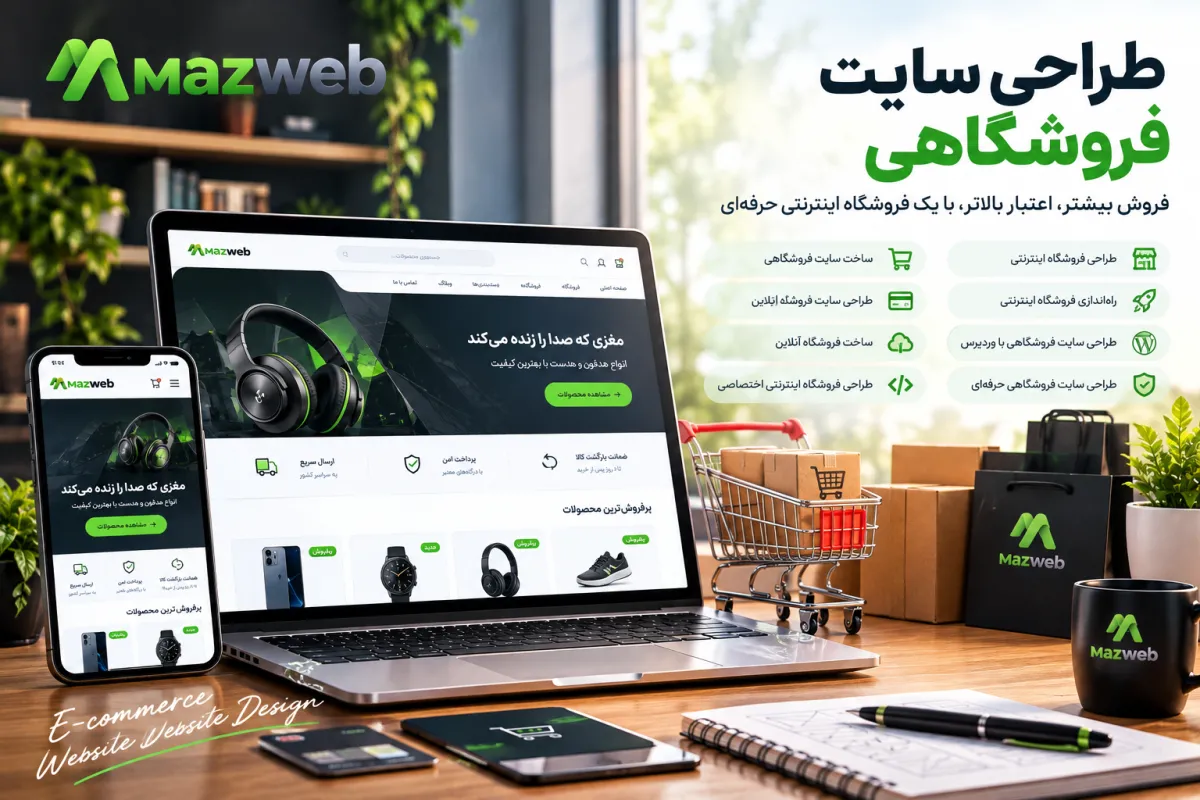
In the not-so-distant past, businesses needed a physical storefront in a high-traffic location to reach more customers. Today, the main street of business is the internet. E-commerce website design means creating a digital branch where customers can view products, make selections, and finalize their purchases without any time or geographical constraints.
However, launching an online store is more complex than setting up a simple blog. Concerns like payment security, user experience on product pages, site speed, choosing the right platform, and estimating costs are among the challenges business owners face. In this article, we explore all these aspects practically to make the path to building an online store clear for you.
What is E-commerce Website Design and How is it Used?
E-commerce website design is the process of building an online platform that enables product display, inventory management, order registration, and online payment. The primary application of these sites is to provide a secure and seamless infrastructure for electronic commerce.
The Difference Between an E-commerce Site and a Corporate Site
Many businesses are initially torn between an informational service site and an e-commerce store. A corporate website is mostly designed to introduce the brand, showcase a portfolio, and attract customers for in-person or phone communication. If your goal is merely to introduce your business, corporate website design will meet your needs. However, if your goal is to sell products directly and receive online payments, you need an e-commerce site with more complex features like a shopping cart and payment gateway.
Benefits and Responsibilities of Launching an Online Store
The main advantage of online selling is unlimited market access and reduced overhead costs for rent and staff. However, these benefits come with responsibilities, including protecting customers' card data, providing rapid customer support, and continuously updating inventory.
What Features Must a Professional E-commerce Website Have?
To ensure the user has a smooth experience from entering the site to receiving the product, the following features are essential:
Homepage and Product Categories
The homepage must provide a clear path to the main categories. The information architecture should allow users to reach products with the fewest clicks possible.
Product Pages and High-Quality Images
The product page is your showcase. High-quality images from multiple angles, precise descriptions, and technical specifications play a key role in the buyer's decision-making.
Shopping Cart and Checkout Process
The checkout process must be short and straightforward. Asking for unnecessary information causes cart abandonment. Integration with reliable payment gateways is also mandatory.
Order and Inventory Management
The admin panel must allow viewing orders, changing shipping statuses, and automatically deducting warehouse inventory after each sale.
Product Search, Filtering, and Sorting
In stores with high product diversity, an advanced search system with filtering options (by price, brand, features) significantly improves the user experience.
Mobile Responsive Design
Over half of all online purchases are made via mobile. Your site must display flawlessly without layout breaks on mobile screens, with appropriately sized touch buttons.
Security, Privacy, and Data Protection
Using an SSL certificate (HTTPS), data encryption, and supporting banking security protocols are the bare minimums for a trustworthy store.
Integration with Analytics and Reporting Tools
Connecting your site to Google Analytics and user behavior tracking tools helps you identify points of sales leakage.
Trust-Building and Customer Support Features
Displaying previous buyers' reviews, trust badges, and easy access to live chat or support numbers builds customer trust.
Steps to Design and Launch an Online Store
- Define the Business Model and Audience: Are you selling physical or digital products? What are the characteristics of your target audience?
- Choose a Domain Name and Hosting Infrastructure: The domain should be short and brand-relevant. E-commerce hosting must have adequate resources and high uptime.
- Design Product Category Structure: Creating a logical hierarchy for categories.
- Choose the Implementation Method: WordPress, website builders, or custom coding.
- UI and UX Design: Visual design of pages and mapping the user journey.
- Data Entry and Product Content Creation: Writing standard, SEO-friendly descriptions.
- Set Up Payment and Order Processing: Connecting to payment gateways and shipping systems.
- Security Checks and Performance Testing: Testing the site across browsers and devices.
- Site Launch and Maintenance Plan: Launching the site and beginning marketing.
Methods of E-commerce Website Design
There are different paths to building an online store:
E-commerce Design with WordPress and WooCommerce
WordPress, coupled with the WooCommerce plugin, is the most powerful infrastructure for building a store. High flexibility, reasonable costs, and a large user community are its advantages. If you are looking for WordPress website design for your store, this method is the best starting point.
Using Website Builders
Website builders allow you to create a site without coding. They are fast but come with significant limitations regarding SEO and custom features.
Custom Online Store Development
Custom coding (using frameworks like Laravel or React) provides the highest level of flexibility and security, but requires a very high budget and execution time.
Comparison of Design Methods
| Method | Initial Cost | Setup Speed | Flexibility | Scalability | Suitable For |
|---|---|---|---|---|---|
| WordPress (WooCommerce) | Medium | Fast | High | High | 80% of businesses |
| Website Builders | Low | Very Fast | Low | Limited | Very small stores |
| Custom Development | High | Long | Very High | Very High | Large, unique projects |
Is WordPress Better for E-commerce or Custom Development?
This is one of the most common questions. The short answer: it depends on your needs.
If you are a growing business, your product diversity is standard, and you want to retain some control over your site, WordPress is the best option. Its diverse plugins allow you to implement any feature you can imagine at a reasonable cost.
However, if you are building a store with a completely different commercial logic (like a multi-vendor marketplace with thousands of concurrent users) or have very strict security requirements that off-the-shelf platforms cannot meet, consider custom development. For standard businesses, choosing WordPress keeps your costs manageable and allows you to focus on marketing.
What Factors Influence E-commerce Website Design Costs?
It is a mistake to assume a fixed price for building an online store. The final cost depends on the following factors:
- Design Method: Custom coding is much more expensive than WordPress.
- UI Complexity: Custom UI/UX design costs more than pre-made themes.
- Number and Variety of Products: Entering data for thousands of products by a technical team costs more.
- Custom Features: Membership systems, reseller panels, or integration with accounting software.
- Security and Technical Requirements: Implementing advanced security protocols.
- Content Creation: Writing product descriptions and basic SEO services.
- Support and Maintenance: Annual contracts for updates and bug fixes.
To get an accurate estimate, you must list your requirements and request a quote from an expert team. If you intend to launch a store, you can send your conditions to the e-commerce website design experts at Mazweb to receive a suitable proposal based on your needs.
What Role Does E-commerce SEO Play in Increasing Traffic?
Great visual design alone doesn't attract customers. Customers must find your site on Google. E-commerce SEO has structural differences compared to standard websites:
- Category Structure and Product Pages: The site architecture must allow Google bots to crawl and index all products.
- SEO Titles and Meta Descriptions: Using keywords in product titles (e.g., "Buy Model X Headphones Best Price").
- Readable URLs: Using the product name in the URL instead of numeric IDs.
- Original Product Content: Copying descriptions from other sites results in Google penalties. Content must be unique.
- Image Optimization: Low image file sizes and appropriate Alt Text.
- Managing Duplicate Pages: Category filters can create duplicate pages that must be managed with Canonical tags.
- Structured Data: Using Schema markup to display price, availability, and product ratings directly in search results.
A standard technical design lays the groundwork for SEO, but organic growth requires a continuous strategy. In this journey, acquiring SEO services can accelerate your store's growth path.
Common Mistakes When Designing an E-commerce Website
- Complicated Registration Process: Forcing users to register before their first purchase causes drop-offs. Allow guest checkout.
- Low-Quality Images: Blurry images or lack of zoom gives buyers a bad impression.
- Requesting Unnecessary Info at Checkout: Asking for a national ID or landline number for a simple purchase is unnecessary.
- Lack of Clear CTAs: The "Add to Cart" button must be obvious and accessible.
- Ignoring Site Speed: Heavy stores with unoptimized images frustrate users.
- Hiding Shipping Costs: Don't suddenly add postal costs at the final step; transparency from the start builds trust.
- Not Displaying Customer Reviews: A product without reviews generates less trust.
How to Choose the Right Company for E-commerce Website Design?
Choosing the right technical team guarantees project health. Pay attention to these criteria:
- Review Real Portfolios: Have they designed active and successful stores?
- Contract Transparency: The scope of services, maintenance costs, and code ownership must be in the contract.
- Communication and Support Quality: Are they available after the site is handed over?
- Focus on SEO and Security: Do they follow technical SEO principles in the structure?
- Documentation Delivery: Do they provide training on managing the store?
E-commerce Website Design for Local Businesses
Many local businesses think online selling doesn't apply to them, whereas by launching an online store, they can manage their local delivery service and convert city customers into online buyers. If you operate in the northern region of the country, utilizing website design in Mazandaran services from a local team familiar with the culture and needs of the regional market can be effective in connecting with customers.
FAQ
What is e-commerce website design? The process of building a website capable of displaying products, managing a shopping cart, connecting to a payment gateway, and managing orders.
How long does it take to design an e-commerce website? For WordPress sites with a limited number of products, it takes about 2 to 4 weeks. Custom projects may take several months.
How is the cost of e-commerce website design determined? It is determined based on the design method, custom features, number of products, UI quality, and SEO and maintenance services.
Is WordPress better for building an online store or custom development? For most businesses, WordPress is the best option due to lower costs and high flexibility. Custom development is suitable for very large projects with specific logic.
Can an online store be built without programming? Yes, by using WordPress and the WooCommerce plugin or ready-made website builders, you can launch a store without needing to write code.
What features does an online store need? A shopping cart, payment gateway, product management panel, order reporting system, responsive design, and SSL security are essential.
Can an e-commerce site attract customers without SEO? It is only possible through paid ads (direct traffic), but to attract organic customers from Google, SEO is an absolute requirement.
What should we do after launching an online store? Continuous product content creation, updating plugins, regular backups, executing an SEO and advertising strategy, and analyzing user behavior.
Conclusion
E-commerce website design is a beginning, not the end of the journey. Having a fast, secure, and user-friendly online store is the necessary infrastructure for a presence in the digital market. The most important step is recognizing your business needs. If your sales logic is standard, WordPress combined with an expert team can give you the best output on a reasonable budget. Invest in content quality, site speed, and payment security so customers trust buying from you.
If you are ready to launch your online store in a principled and professional manner, consulting with a capable team can prevent resource waste. To explore features and get advice regarding Mazweb's e-commerce design services, you can contact our experts through the website.
Have a custom project?
Talk to Mazweb to review your needs and find the right path.
Start the conversation
Comments 0
No comments yet. Be the first to comment.
Leave a comment